
"Thank God It's Over:" a 'La Grazia' review
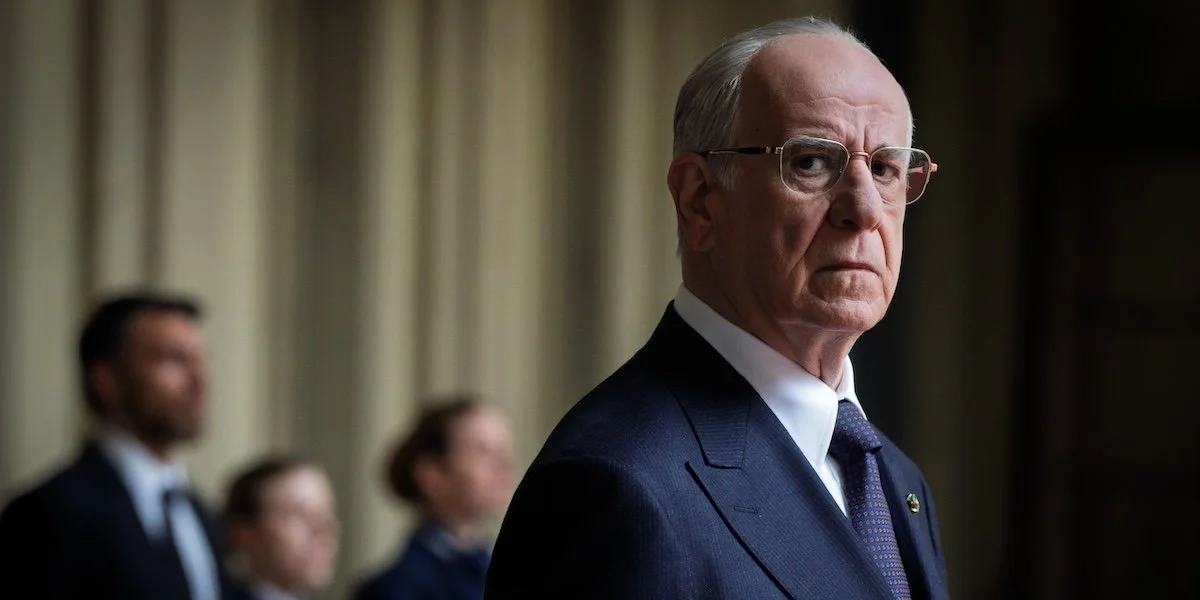
Still from ‘La Grazia’ (2025), showing Toni Servillo as President Mariano De Santis.
Watching Paolo Sorrentino’s La Grazia at the 41st Miami Film Festival GEMS was an almost agonizing experience. It trapped the audience in the same painfully slow loop that the film’s protagonist, President of Italy Mariano De Santis, is in: a cycle of confusion, frustration, and absolute nothingness.
I would like to say that I understand the message the film was trying to convey, and while you can sort of pull themes together, it's loose at best. If you have not watched the film already, La Grazia takes you through the last six months of Mariano De Santis’ presidency. He swims in a sea of conflicts: whether he should sign into law a bill legalizing euthanasia, whether he should pardon two individuals who murdered their partners, his crumbling relationship with his two children, all of this while the death of his own wife looms over his head, and her infidelity. He stands in a prison of his own making, a prison made of indecision and stubbornness.
This film felt like taking the cake out of the oven too early; most of the ingredients are there, but it falls flat and soggy. Regardless of its two-hour run time (which felt like four), it felt like we were missing elements of the story. The film was slow and barren, with these fleeting moments of excitement. Sorrentino was so close to creating something deeply meaningful and heartwrenching, but instead, it became a nothing burger of florid, loose ends.
This was a story about a man so stubborn his nickname was Reinforced Concrete, yet so weary and tired of tradition, that he began to crack. We see the slight shifts he takes throughout the film, the electronic music that blares out in the most tense of moments, the way he’ll whisper-rap to himself songs he swore to hate, how he calls back for a fashion interview even though he knows nothing about it, the mere thought of seeing another woman romantically. He smokes cigarettes he’s not supposed to, and blares rap music from his headphones. He is almost reverting to a more youthful self, a rebellious and carefree one. His hard, cold facade crumbles, and the question that prompts this haunts me:
Di chi sono i nostri giorni?
Who owns our days?
The film never answers this, but as we watch the President sort of take his life into his own hands, I am once again left with the feeling of emptiness. Because he kind of… didn’t. There was no climax to this movie; there was simply nothing. I waited even as the credits rolled. I waited for the meaning to find me, I waited for it to whisper its soulful secret, and it never came. I guess not all movies need to convey some all-powerful message, but this one felt like it could have, it should’ve. It breaks my heart that this was some half-baked, confusing story, one that toed the line of meaningless. There is soul and heart in the film; it is almost visible until it gets lost in the sea of long-winded sections of nothing. It was simply too confusing and strung out to be coherent. I really wanted to like it.