
Harvey Sutherland: funk, fatherhood, and the beauty of overthinking

In the green room at ZeyZey in Miami’s Little Haiti, Harvey Sutherland sat with his arm slung across the back of the couch—casual, calm, completely at ease. I had yet to see him on stage, but it was already clear from having been in his presence: he was in his element.
It’s not every day you talk to someone who can turn synthetic beats into a song that practically breathes. That feels inherently alive. And for Harvey Sutherland, groove isn’t just something you hear—it’s something you have to feel.
“It’s very physical, what we do,” he said.
And his energy is contagious. Scan the crowd and it’s like he’s multiplied hundred-fold—an army of body doubles locked into his rhythm.
In today’s music world, staying relevant requires more than just talent—it’s about connection. You can be a genius producer, but if you can’t make an audience hear what you hear, feel what you feel, the moment’s gone. Sutherland doesn’t have that problem. His sets are alive, kinetic, and unapologetically human.
As a keyboard player, Sutherland explored his place in music all throughout high school, piecing together different sounds and melodies until he found something that felt like home.
“I started getting more excited about DJing and electronic music,” he said. “I’ve done that for more than 10 years now.”
His relationship with music has always lived in that tension between curiosity and control—where artistic impulse meets surgical precision.
“I’ve always respected people who have their very own strange inner lives, and channel that into their music.”
Over time, that meticulous creative process has evolved into his signature style: neurotic funk. It’s the balance so thin (so much so, it’s practically translucent) between letting the track speak for itself and playing around with it until it feels utterly perfected.
“It’s the process of overthinking something and overworking something because it’s just how your brain works,” he confessed. “It starts taking on its own sort of funk, its own sort of groove.”
He pauses, smiling slightly. “It’s like chiselling a statue out of a piece of stone. The more you chisel at it, the more it starts to take form. That process is the neurotic funk.”
That same creative tension fuels Debt, Sutherland’s latest album—a follow-up to his 2022 debut Boy and the first full-length album since.
“It’s an interesting body of work for me,” he said. “It’s dance music, but it’s not brash and over the top.”
There’s a playful subtlety to it. Much of Debt was born out of new beginnings—fatherhood, long nights, stolen studio moments with a newborn nearby. The album feels lived-in, grounded, and deeply personal.
“It’s the music I made after having a baby and taking time off from making music. It’s kind of a step away from the last record. It’s a little more of my inner world,” he expressed. “It’s a little cocoon of itself—it feels familiar.”
That intimacy seeps into every track. Debt feels like a conversation between Sutherland and himself—an exploration of where sound meets soul. It’s the kind of record that invites you in quietly, then keeps you moving before you even realize you’re dancing.
The heartbeat of it isn’t perfection—it’s honesty.
Sutherland beams about “Chop chop movie boy,” what he proclaims to be his favorite track on the album. “[It’s] the first track. I finished it early on.”
What started as what he calls a “silly studio moment” became the heartbeat of Debt—a piece that captures his philosophy: that music should feel natural, playful, and alive. It truly is this album’s shining star.
“I’m finding my feet again as a producer,” he said. “I’ve moved into a new studio. And I just started messing around with a couple sounds I had been chasing.”
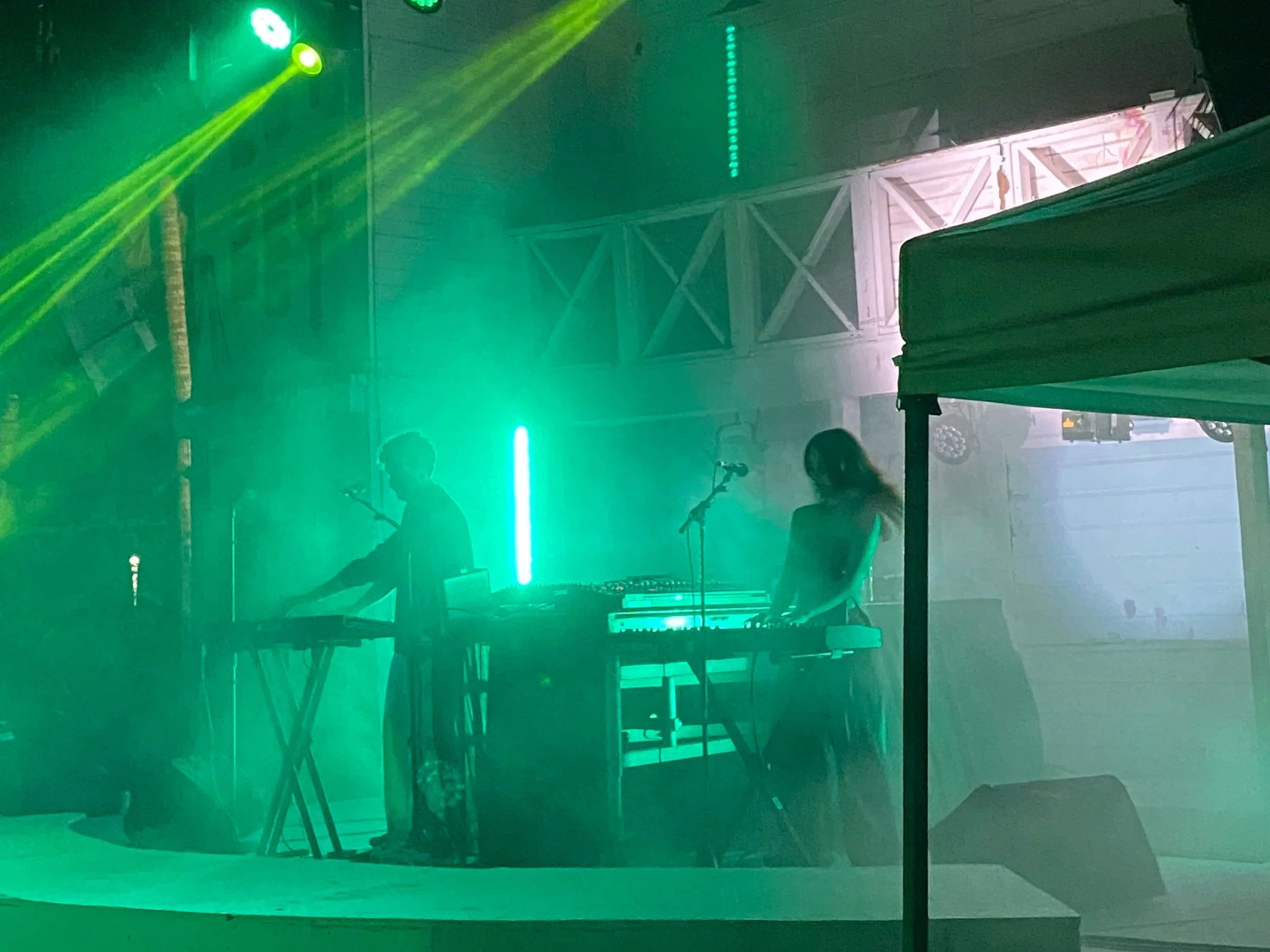
Photo Credit: Bella Armstrong
He laughs. “That’s the thing with dance music—it’s very easy to overcook it.”
Because when a track becomes too polished, it loses its pulse. And Sutherland’s music? It’s got a heartbeat—steady, strong, unforgettable.
“It’s trial and error,” he said. “A lot of experimenting. But there’s always a sound I’m chasing.”
But at his core, Sutherland is a performer.
“I’ve played some really great shows and some amazing festivals,” he said. “It’s about connecting with people. That’s the best part of doing this.”
“I’m forever chasing that high—whatever show it is.”
That’s the soul of Debt—the pursuit of connection, both inward and outward. It’s a reminder that in a world oversaturated with digital perfection, there’s still room for something imperfect, human, and profoundly alive.
So get into the groove and listen to Debt by Harvey Sutherland today.
Close your eyes, put on your dancing shoes, and let the music speak for itself.
A special thank you to Jessica and the team at ZeyZey Miami. This piece would not have been possible without you!