
The Wild and Precious Life of Mary Oliver
For a film about one of the most prolific poets in US history, there is surprisingly little text in Mary Oliver: Saved by the Beauty of the World.
“Text is only used for the titles of the piece,” explained director Sasha Waters. “I wanted it to feel like a poetry reading.”
Mary Oliver: Saved by the Beauty of the World is a 2026 documentary about the eponymous Mary Oliver. A famed recluse, wildlife advocate, and queer woman, Oliver was a best-selling author who is largely regarded as the greatest American poet of the 20th century. She lived a mysterious, off-the-grid life for decades until, suddenly, she didn’t.
This film is such a beautiful and thoroughly caring exhibit of Oliver’s life and legacy. The footage itself is delightful and ephemeral, weaving together fuzzy Super 8 clips and home films, and pulling from Oliver’s photography archives, many of which were taken by her partner, Molly Malone Cook.
The flickering images illustrate the landscape of her life. A simulacrum of the Ohio forests of her childhood, represented by the Cleveland Arboretum. Austerlitz and Steepletop, the estate of Edna St. Vincent Millay, the rugged wilderness where she lived and fell for aspiring photographer Molly Malone Cook. Most often, we see her beloved Provincetown: the beach forest and dunes, the house she shared with Cook, the dump where she stole shingles and discovered she had won the Pulitzer.
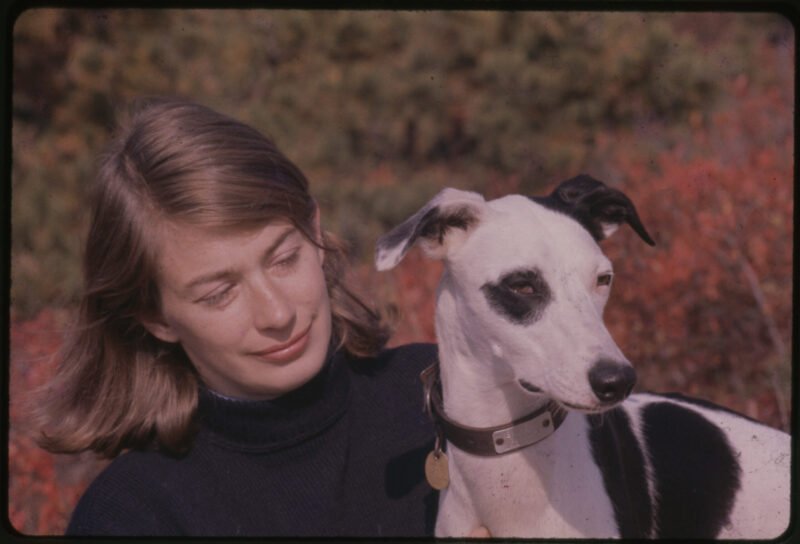
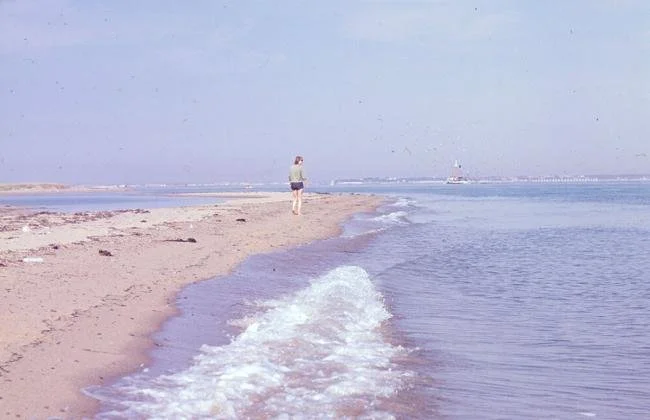
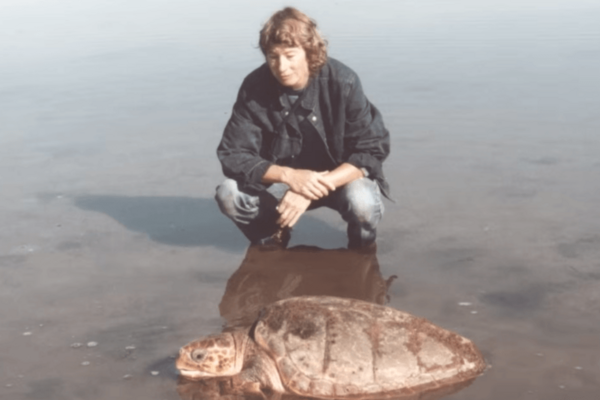
Mary Oliver was 28 when her first poetry collection, No Voyage, and Other Poems (1963), was published.
Over the next two decades, Oliver published four more collections, each to little critical acclaim. Despite their acute poverty, Oliver and Cook relished their life together, and Cook steadfastly encouraged Oliver’s writing. Oliver spent most of her time with a pencil in hand, exploring the wetlands of Provincetown, content with what she had: her nature and her family.
It was thus an enormous surprise when everyone discovered American Primitive (1983) had won the 1984 Pulitzer Prize.
Oliver valued privacy and was instantly uncomfortable with her overnight fame. Cook took the mantle of protecting Oliver’s peace, and she withdrew heavily from society for decades. It was only in her final years, and after Cook had passed, that she began to make public appearances.
It was then she discovered what she had missed. As critical acclaim comes and goes, Oliver had gained something stronger: legions of readers who resonated deeply with her work. In the final decade of her life, Oliver opened the doors. She began reciting at poetry readings— and selling them out. She featured in a series of intimate interviews with Maria Shriver, where she revealed the life behind the author’s photo.
And until the very end, she kept writing.
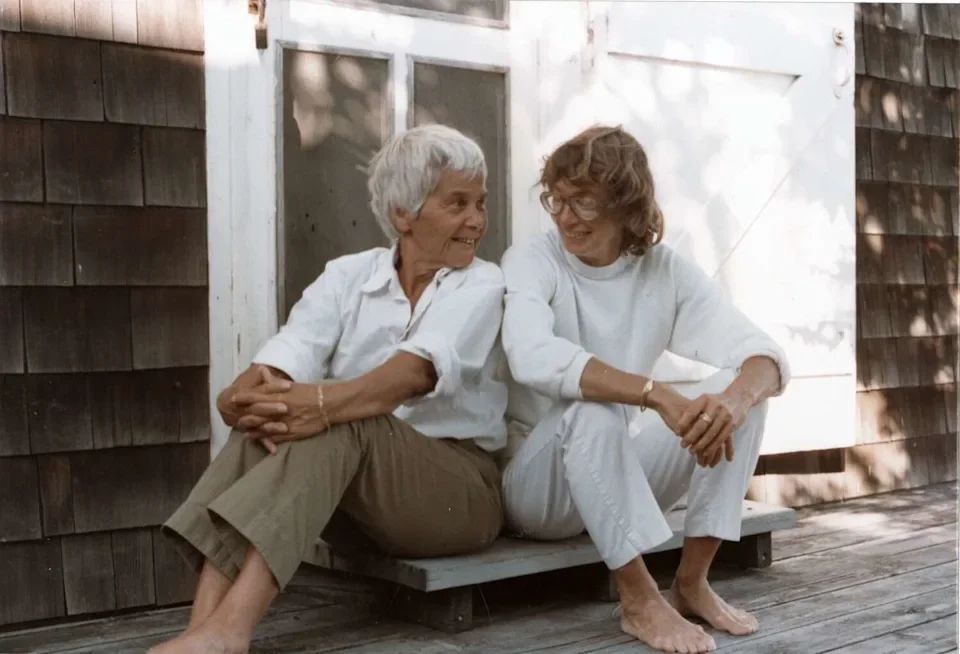
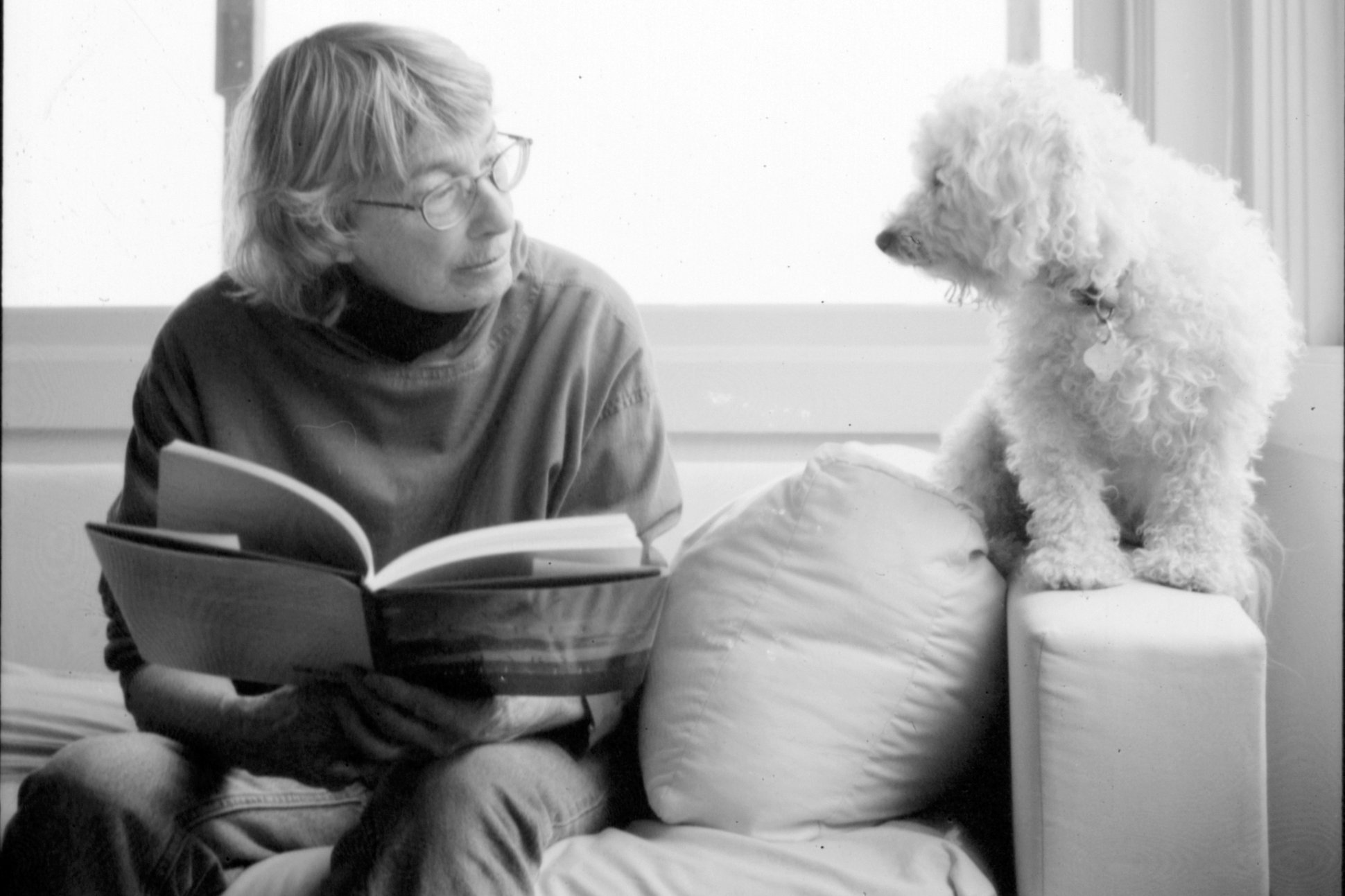
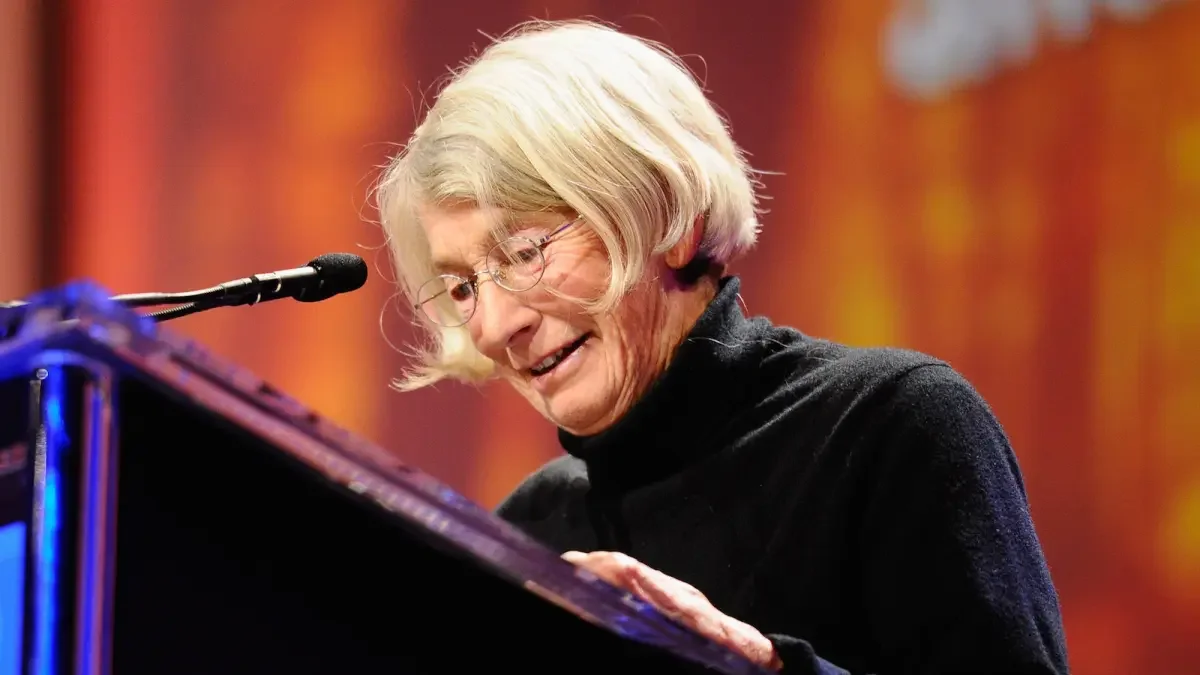
She would ultimately publish over 30 poetry collections and essays before her death in 2019. With over 200 pieces alone in her last collection Devotions (2017), to say Mary Oliver was prolific is an understatement. Thus, it’s little surprise that the making of Saved by the Beauty was a massive collaborative effort.
Director Sasha Waters worked with many, many people to compile the final film. Her closest collaborator was the Mary Oliver estate, who approved every poem selection. The picks are some of her best– Wild Geese, The Summer Day, The Swan– and each is matched with Waters’ visuals. The poems are meant to signify moments in time, scenery changes, and characters, Waters explained. “It’s like a musical number in a musical.”
Waters trawled through over forty boxes of archival material with Oliver’s longtime biographer, Lindsay Whalen. She picked from her personal collection of “orphaned” home films. She shot hours of B-roll in Provincetown and Ohio.
The star of the show are the interviews and the readings. Waters draws on friends and fans alike; Provincetown locals, academic admirers like Jason Reynolds and Ada Limón, big-name stars like Oprah, Lucy Dacus, and John Waters.
It is crystal clear how all of them are in love with this woman and her words, reading from well-thumbed novels and pulling stories from photo albums. The content could have been overwhelming, but it isn’t. Everything is well integrated, each story flowing smoothly into the next. There is so much love and beauty in this film that it shines in every moment.
There is also an inescapable undercurrent of grief in this film.
“To write,” Oliver once said, “one needs two things: sorrow and stamina.”
She had plenty to pull from. Parental abuse in her childhood. Chronic loneliness. The slow decline of her life-love Cook from emphysema. Loneliness, returning now in old age. Addiction to alcohol, to cigarettes. A relationship that took her away from her home and Provincetown family in her twilight years.
It was surprising to learn about the dark backstory of a figure known for her serenity and determined hope, but ultimately, it is all the more validating.
In a Q&A after the screening, Waters shared that she hopes audiences will want to read more Mary Oliver, of course, but also to live more like Mary at her best– slowing down and appreciating the beauty of the world. Oliver was not perfect and she was not untroubled, but she sought to live intentionally, and to encourage others to do the same. She spent much of her life penniless and unrecognized, a critical failure, but she still embraced it wholeheartedly. Every moment.
When asked what she hoped viewers would take away from the film, Waters laughed. “If [Oliver] was here, she’d probably say “What are you doing inside on a beautiful afternoon? Go outside, go for a walk in the woods or to the beach.””
Mary Oliver: Saved by the Beauty of the World opens with a recitation from another Oliver-adoring A-lister. In the prologue, Stephen Colbert shares that he reads ‘The Summer Day’ each year for his children on the first day of the season. Despite the practice, he cannot get the words out.
It is woven throughout the film, his inability to speak the words of this poem. How he tries again and again to get through it, the closing of his throat visible, his eyes glistening. The emotion blocking his words becomes a poem in itself. Many voices speak Oliver’s words in this film, friends and admirers alike, with intonation clear and wavering and everything in between. Each time, it feels like this.
Finally, at the film’s conclusion, Colbert makes it to the end, eyes glassy.
“Tell me, what is it you plan to do
with your one wild and precious life?”
“Each time you read it, you find something else in it.” He wipes his eyes beneath his glasses and smiles. “She was pretty damn good.”
This is the power of poetry.
She was pretty damn good indeed.
Mary Oliver: Saved by the Beauty of the World will get a theatrical release in Summer 2026 and be released on PBS American Masters. This film was made possible by collaboration with the Mary Oliver estate and the National Endowment for the Humanities. This review was written after an advanced screening at the 43rd Annual Miami Film Festival.