
'Belén' flips the script, putting conservatism on trial
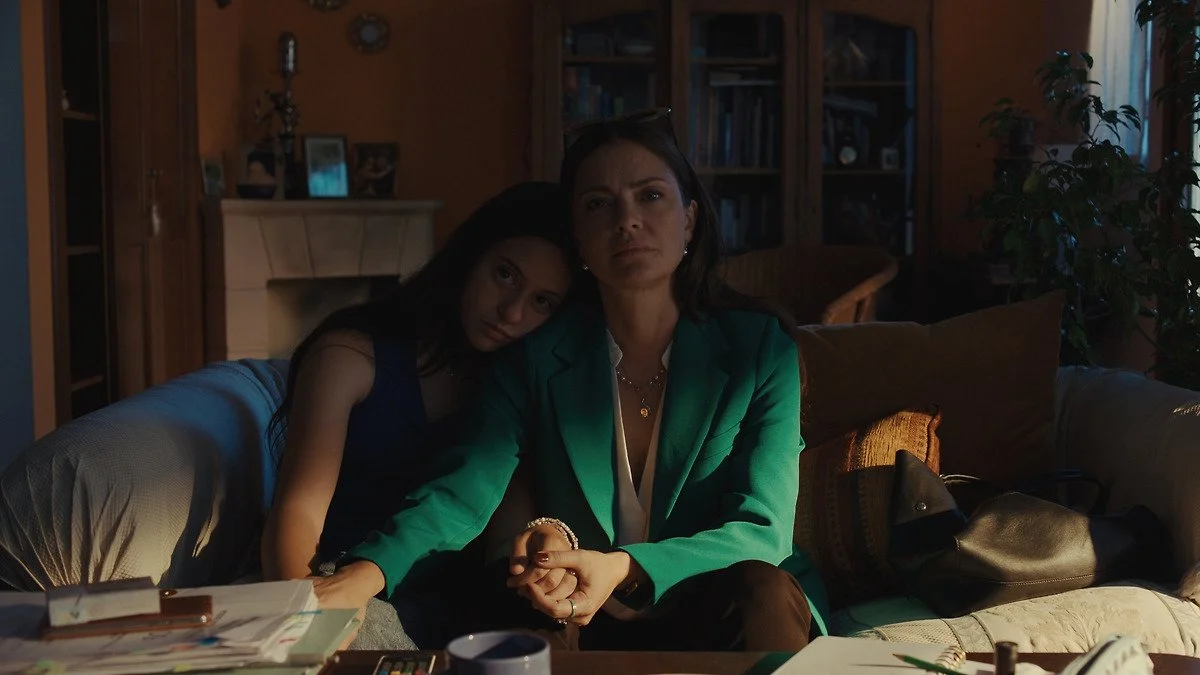
Still from Belén (2025).
I didn’t walk into Belén expecting to feel implicated.
I thought I was there to observe — another foreign-language festival screening, another sobering story from a place far from my own daily reality, another chance to see a story, unlike anything I've ever seen, unfold. Instead, I walked out unsettled, embarrassed by how easily I had assumed this would be someone else’s tragedy.
At the 41st Miami Film Festival GEMS, Belén screened to a restrained and slightly apprehensive crowd — the kind that doesn’t clap immediately, because people are still trying to find their way back into their bodies. The film, now shortlisted for the Academy Awards, doesn’t demand your tears or your sympathy. It asks for your attention.
And then it refuses to let you melt into your seat, to hide behind distance, culture, or time.
The story follows Belén, a young woman whose life is quietly — and then catastrophically — overtaken by a system that sees her as a problem to be managed, not as a person to hear or try to understand. There is no sensationalism in her suffering. No cinematic martyrdom. Just the slow, agonizing, suffocating realization that her autonomy is conditional, her humanity negotiable.
And above all else, seemingly alone in a cruel world that villainizes womanhood.
What disturbed me most wasn’t only how she was treated — though that alone is unbearable — but how normal it all felt.
The doctors are polite. The officials are calm. The mechanisms of control don’t roar. They hum, like an unrelenting, soft buzzing that can strike you dead at a moment’s notice. They present themselves as care, as procedure, as inevitability. And Belén is left to absorb the violence of that restraint in silence.
But somehow, Belén is not a film about erasure. It is a film about witness.
Because what unfolds beyond her imprisonment is something rarer: a collective refusal to let her disappear. Slowly, painstakingly, people rally. Journalists keep asking the hard questions. Women organize. Lawyers push back. Years pass — too many years — but the world refuses to forget her.
And that, almost more than the injustice itself, is what stayed with me.
I hated that it took so long. I hated that her release required public pressure instead of basic dignity. But I couldn’t ignore the fact that an entire country eventually stood up and said: this is not care. This is cruelty.
Watching it now, in 2025, as conservatism tightens its grip across borders and reproductive autonomy is reframed as something dangerous, Belén does not feel historical. It feels prophetic.
The film never explicitly draws parallels to the present. It doesn’t need to. Every invasive exam, every condescending justification, every moment Belén is spoken over instead of spoken to echoes in a world where women are still asked to surrender their bodies for someone else’s comfort.
By the time the credits rolled, at first, there was only breathing. And then, finally, hands found each other.
Not thunderous. Not nostalgic. Something heavier. More urgent, with a hint of gratitude.
Like we had all beared witness to something extraordinary unfold. Because, in truth, that’s exactly what we did.
And I clapped because I didn’t want to be part of the silence that let Belén vanish in the first place.
This film is shortlisted for an Oscar, but it’s not for prestige. It’s because the story it tells is still unfolding today — in courtrooms, in hospitals, in legislatures — and because watching it is no longer optional.